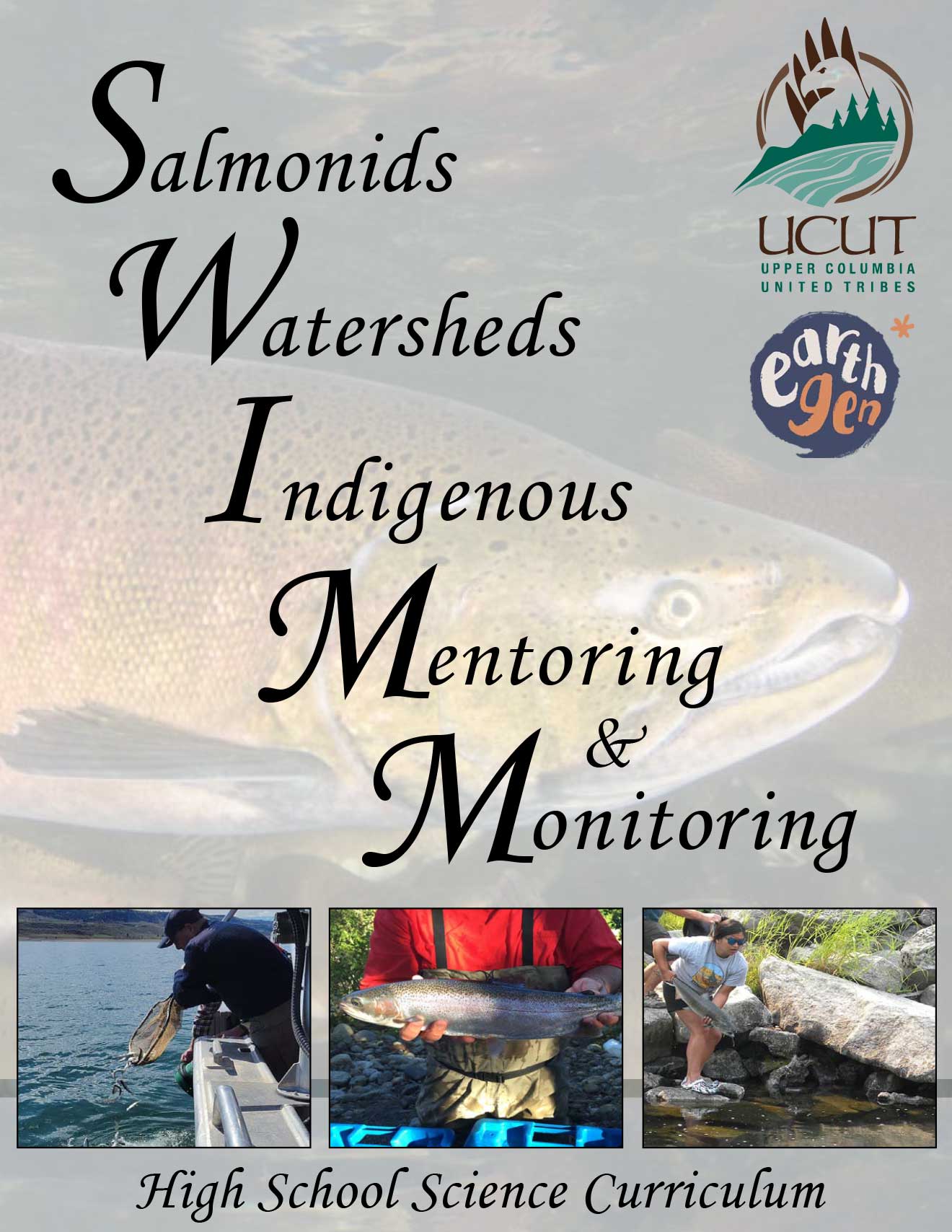

In 2021, UCUT was contacted by EarthGen with the goal of co-developing a natural resources and tribally focused, high school, science-based curriculum. With support from the Washington State Office of the Superintendent of Public Instruction, EarthGen and UCUT collaborated with local teachers, tribal knowledge holders, fisheries experts, and regional educators to develop SWIMM. In the summer of 2025, the SWIMM Curriculum went live on the Open Education Resources (OER) website and is free and available to the public and teachers throughout the region.
SWIMM- Salmonids, Watersheds, Indigenous Mentoring, and Monitoring
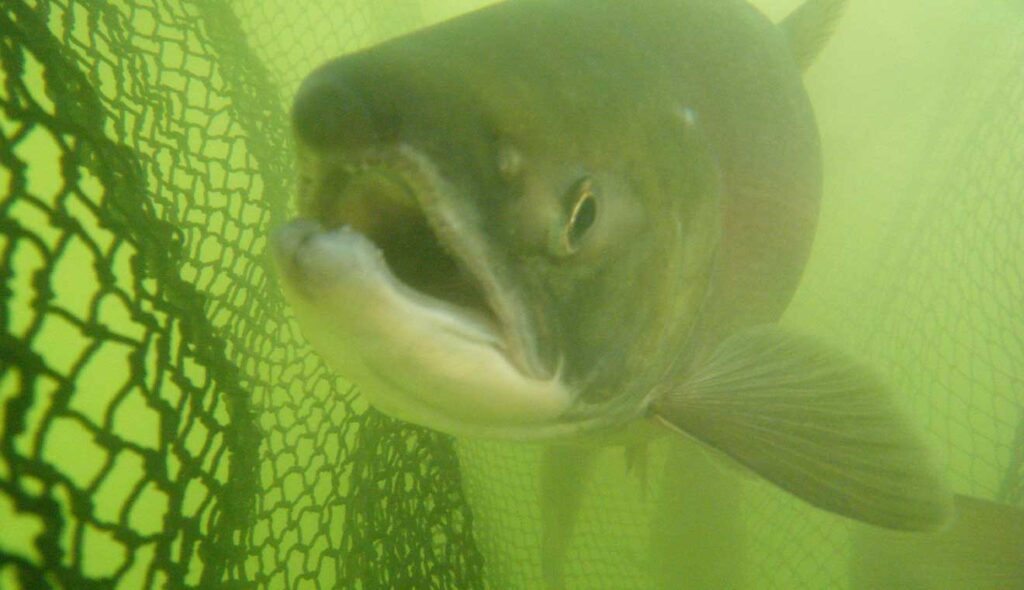
This unit explores the critical connections between Salmonids, their ecosystems, and Indigenous ways of knowing and relating to the environment. Spanning five chapters, students will investigate the life cycle of salmonids, habitat needs, migration patterns, and the cultural significance of salmon to Indigenous communities of the Pacific Northwest. They will also explore the biological health of Salmonids and their role as indicators of ecosystem health. Through this curriculum, students will examine the ecological, cultural, and economic importance of Salmonids and the impacts of human activities, such as climate change, pollution, and overfishing, on their survival. The curriculum is designed to equip high school students with a comprehensive understanding of the critical role Salmonids, particularly Chinook salmon, play in both the environment and Indigenous cultures. Students will engage with the entire life cycle of Salmonids, from egg to spawning adult, exploring how environmental factors and human activities influence their populations. Through the lens of Indigenous knowledge, students will reflect on how these cultures have historically depended on salmon for sustenance and economic prosperity, while also honoring their responsibility as stewards of the land and waterways.
To access the complete SWIMM Curriculum click this link: SWIMM curriculum OER