Coeur d’Alene Tribe of Indians
Coeur d’Alene Tribe of Indians: Guardians of Lake Coeur d’Alene and Stewards of the Upper Columbia Watershed

Coeur d’Alene Tribe
of Indians
Guardians of Lake Coeur d’Alene and Stewards of the Upper Columbia Watershed
Known in their native language as Schitsu’umsh, meaning “Those Who Were Found Here,” the Coeur d’Alene Tribe has deep ancestral roots in the lands and waters of North Idaho, Eastern Washington, and Western Montana. With a rich history of fishing, trading, and cultural gathering across rivers and lakes, the Tribe continues to lead efforts to protect sacred lands and preserve the ecological health of the Coeur d’Alene watershed.
Brief Tribe History

The Coeur d’Alene Tribe, or Schitsu’umsh, has inhabited the inland Northwest for thousands of years. Unlike the nomadic Tribes of the Great Plains, the Coeur d’Alene people established permanent villages along the Coeur d’Alene, Saint Joe, Clark Fork, and Spokane Rivers, as well as on the shores of Lake Coeur d’Alene, Lake Pend Oreille, and Hayden Lake. Their ancestral homeland once spanned nearly five million acres across what is now North Idaho, Eastern Washington, and Western Montana.
In the 19th and 20th centuries, the Coeur d’Alene people endured significant cultural, environmental, and political challenges. When industrial mining surged in Idaho’s Silver Valley, over 72 million tons of toxic waste were dumped into the Coeur d’Alene watershed, devastating ecosystems and endangering tribal lands. In 1991, the Coeur d’Alene Tribe filed a landmark lawsuit that led to the creation of the Coeur d’Alene Basin Restoration Project, initiating what would become one of the most significant environmental justice movements in American history.
In a major legal victory in 2001, the U.S. Supreme Court ruled that the Coeur d’Alene Tribe held rightful ownership of the lower third of Lake Coeur d’Alene. This decision reinforced the Tribe’s role as stewards of their sacred waters and acknowledged their unwavering commitment to preserving the natural and cultural integrity of their homeland.


Key Programs & Partnerships
The Coeur d’Alene Tribe plays a leading role in environmental restoration, tribal sovereignty, and cultural revitalization throughout the region. Their Natural Resources Department oversees restoration of rivers, streams, and upland areas while protecting endangered species and improving water quality. Their work is guided by traditional knowledge, scientific research, and interagency cooperation.
The Coeur d’Alene Basin Restoration Project, developed in response to historic mining damage, is one of the most comprehensive watershed rehabilitation initiatives in the nation. In collaboration with federal agencies such as the U.S. Forest Service, U.S. Fish and Wildlife Service, Bureau of Land Management, Environmental Protection Agency (EPA), and the U.S. Geological Survey, the Tribe has restored fish habitats, monitored toxic sediment levels, and improved the health of native wildlife across thousands of acres.
In addition to environmental leadership, the Tribe actively promotes education, cultural preservation, and economic development through various programs and partnerships. They maintain cultural centers, language revitalization efforts, and youth outreach initiatives aimed at passing on the Tribe’s deep heritage to future generations.
Whether restoring native trout populations or defending sovereign rights in court, the Coeur d’Alene Tribe continues to shape a future rooted in tradition, justice, and stewardship.
Learn more about the Coeur d’Alene Tribe of Indians
Recent Projects by
Coeur d’Alene Tribe of Indians

Columbia River Treaty

Coeur d’Alene Tribe Forest Carnivore Survey
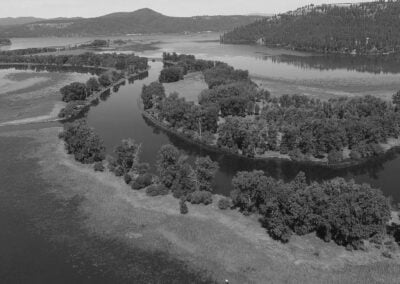
Protecting Lake Coeur d’Alene
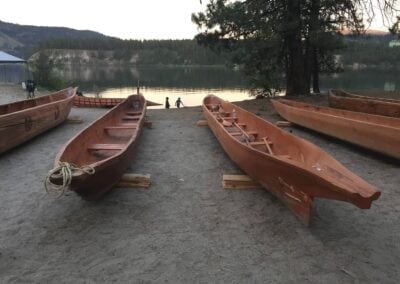
Canoe Journey and Gathering at Kettle Falls

Fish Reintroduction into the U.S. And Canadian Upper Columbia River